RIDLEY: direction and experience
Screenplay, source and timeline
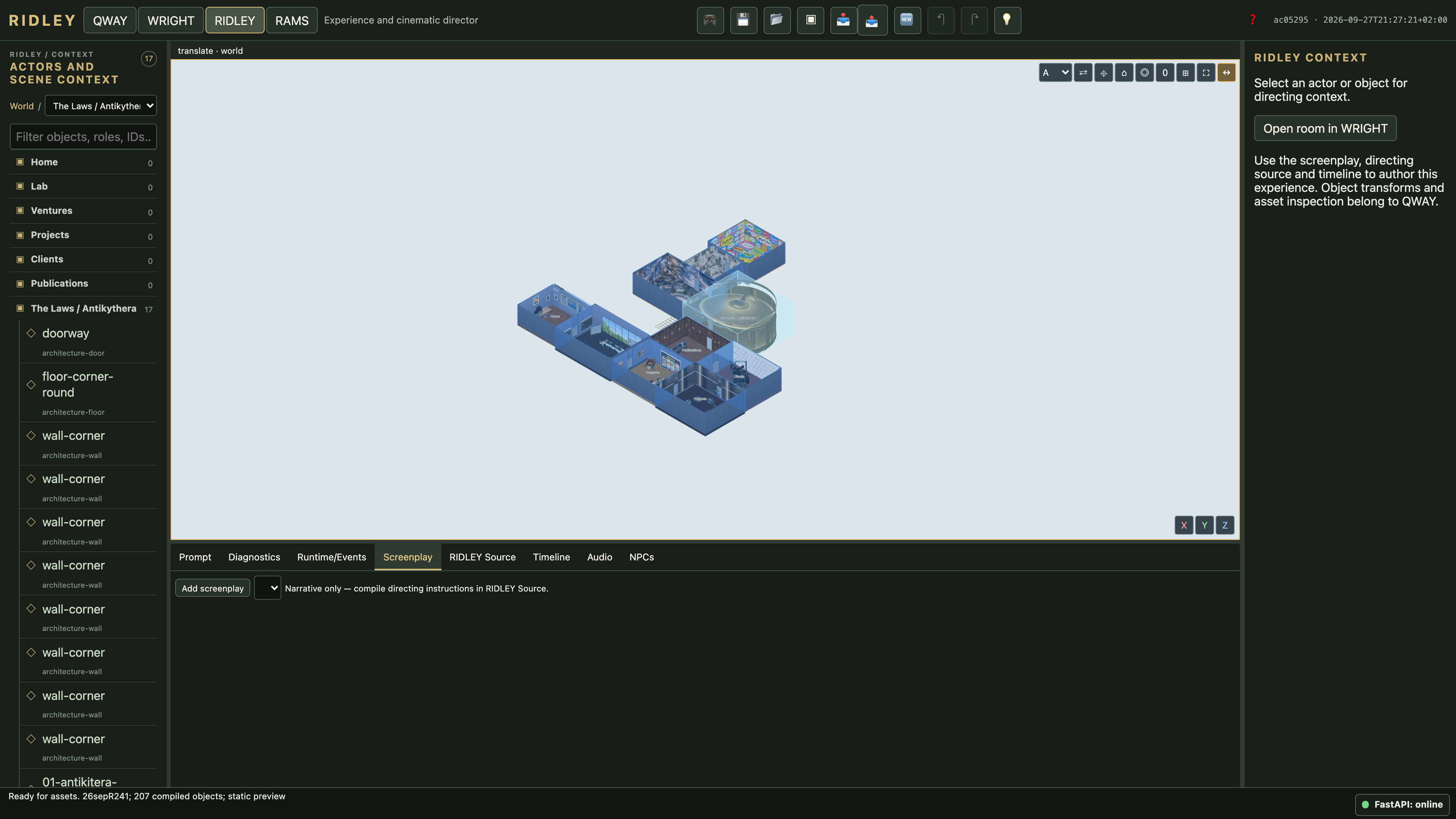
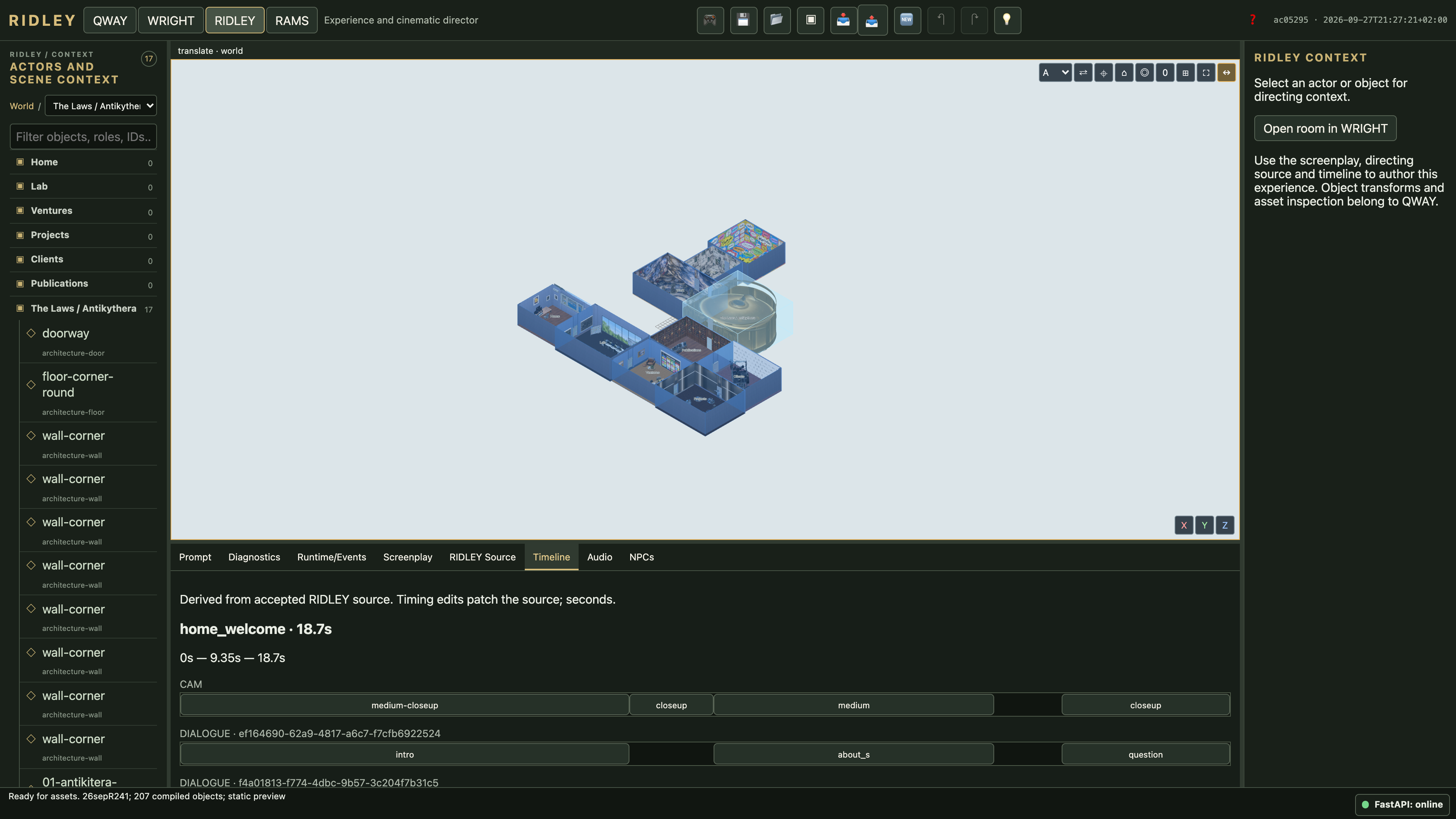
Screenplay is narrative material, not executable scene state. RIDLEY Source is the authoritative directing program. Timeline is derived from that source; selecting/editing cues uses bounded edits, not a parallel animation track database. Prompt-driven direction references the same existing object identities.
Start with an existing compiled world. Name actors and targets clearly in QWAY. In RIDLEY Source, add a cinematic, compile, inspect diagnostics, then preview. The examples in the syntax reference demonstrate framing, dialogue and experience states.
Shots and camera ownership
Shot types include closeups, medium/full/long framing, two-shot, over-the-shoulder, POV, establishing and insert. Camera geometry uses measured bounds and available head evidence. Movement templates include static, pan, tilt, dolly, truck, pedestal, orbit, zoom, follow and crane. These are bounded templates, not arbitrary camera scripts or guaranteed occlusion-free cinematography.
The director owns the camera during a cinematic. User camera changes are gated by the experience state. Conflicting simultaneous camera cues or actor movement cues are rejected. Stop/reset restores the captured authored baseline rather than persisting transient direction.
Audio
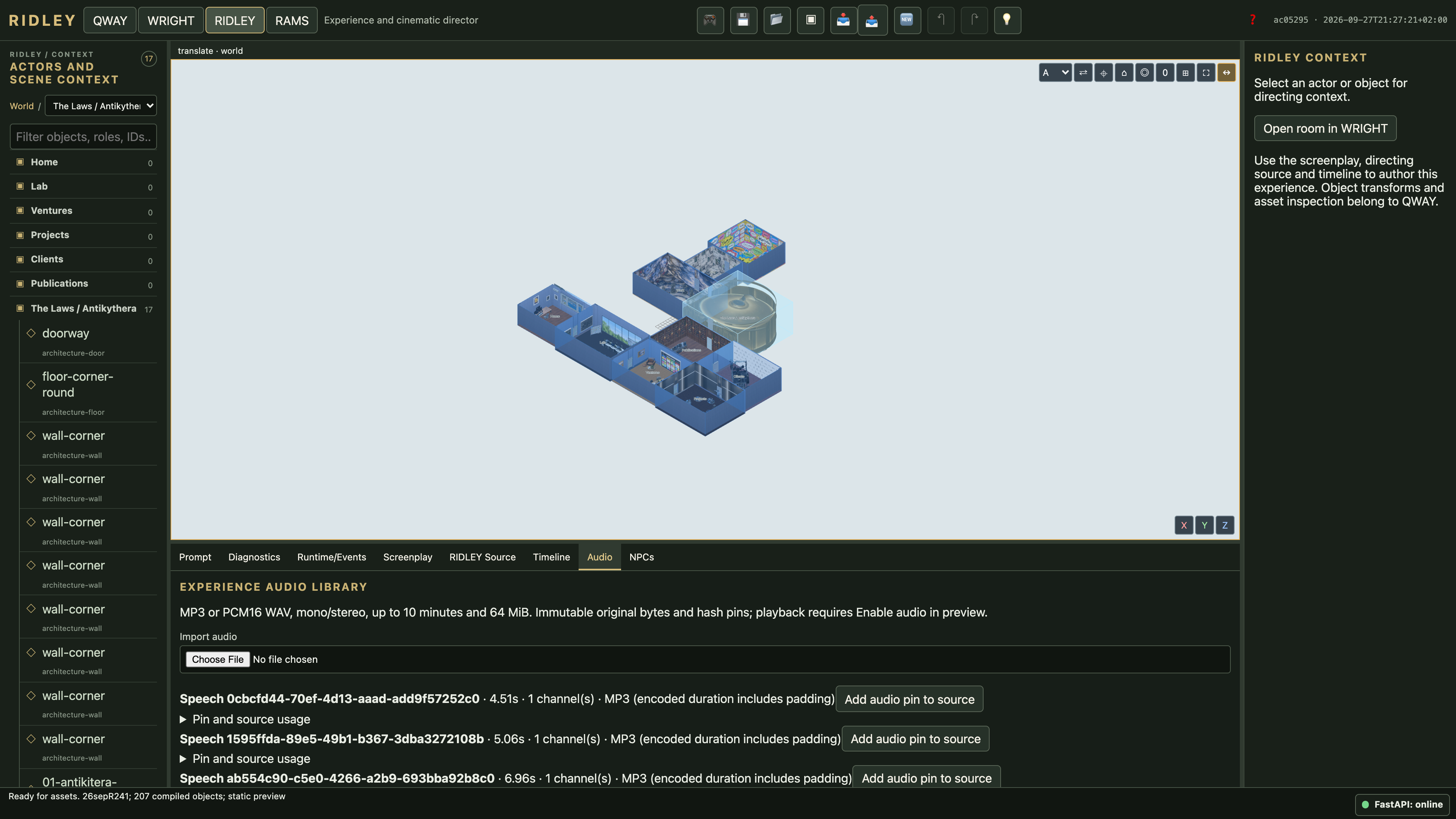
In Audio, upload MP3 (CBR/VBR) or PCM16 WAV, inspect the resource and insert its pinned declaration. Music and spatial SFX use these resources. Enable audio through a user gesture; autoplay restrictions can suspend valid sound.
RIDLEY voice declarations can compile dialogue into cached MP3 speech during WorldPack export. Ordinary scene compilation and page visits do not generate speech. Preview reuses already-generated audio. Subtitles remain silent; timing can extend when generated speech exceeds the authored cue. See speech and talking characters.
NPCs and conversation
NPCs binds an existing actor to an immutable persona revision. The profile contains role, instructions, bounded knowledge, style, language and topic constraints. A conversation state exposes a host transport; the API owns any provider key. The model cannot execute tools or mutate the scene. Session memory is bounded and ephemeral, not durable character learning.
Provider-unavailable status is visible and the conversation can end without blocking the world. Exported players need an explicit optional conversation transport; they do not automatically call the authoring API.
States and events
An experience owns interactive/cinematic/conversation states, user control, camera policy, followers and transitions. Events connect QWAY triggers, WRIGHT room/portal observations and RIDLEY completion/conversation. Filters reference existing identities; once policies are explicit. Runtime/Events exposes observations. See public event types for exact payloads.
Review directing against the actual project